Vince Staples ‘Cry Baby’
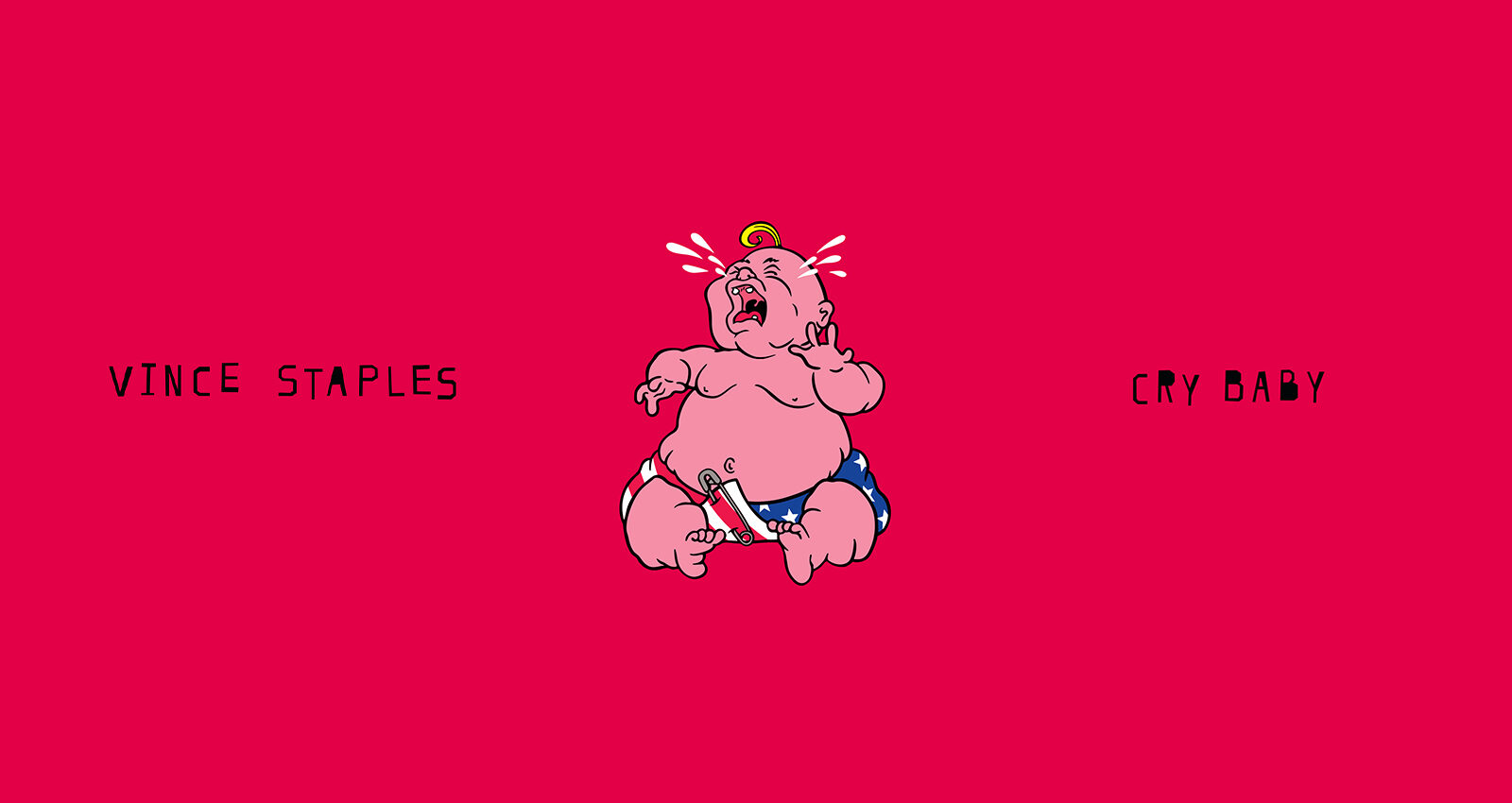
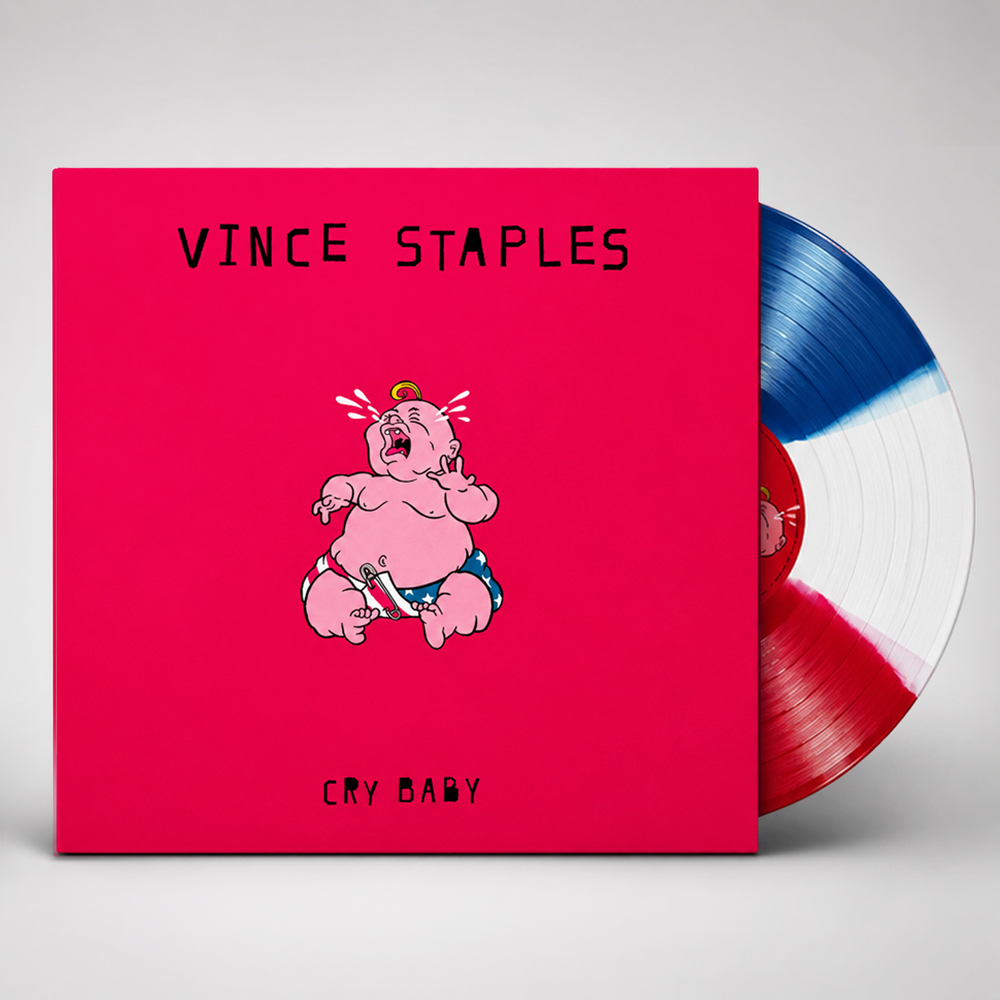
There’s a baby on the cover. Blonde. Wrapped in an American flag diaper.
Vince Staples has never been subtle about that he thinks of America, but Cry Baby wears its intentions more openly than anything else in his catalogue. The image doesn’t ask a question. It sets the stage.
When Georgie spoke with Staples during the release of Summertime ’06 in 2015, he was 22 years old and already thinking beyond the expectations being placed on him. While much of the music industry was busy introducing him as the next great West Coast rapper, Staples seemed more interested in discussing humanity, legacy and the assumptions people make. More than a decade later, Cry Baby feels less like a departure than a continuation of those ideas—only louder, sharper and more direct.
Built around jagged guitars, live drums, and a nervous post-punk energy, Cry Baby is among the most sonically adventurous albums of Staples’ career. The minimalist textures that defined much of Ramona Park Broke My Heart and Dark Times are replaced by distortion, tension and abrasion. Yet for all its experimentation, the album remains unmistakably Vince Staples. His delivery is still measured. His observations remain precise. The difference is that the world surrounding him appears increasingly absurd.
The critique of American power structures—the incarnation machine, the commodification of Black culture, and the long shadow of state violence has always existed within Staples’ work. What Cry Baby adds is a new level of directness. Throughout the album, Vince moves beyond documenting symptoms and begins examining the systems that produce them.
Several of the album’s strongest moments arrive when those tensions collide. On “Cotton,” Staples finds a surprising tenderness amid the album’s political tension. Framed around the refrain “music makes me feel just like cotton,” the song presents music as a comfort, refuge, and a means of carrying on. Yet the title carries its own historical weight, inviting listeners to consider the complicated relationship between Black creativity, American history, and the industries built around both.
“White Flag” captures one of the album’s recurring tensions: the distance between admiration and understanding. Staples moves between police encounters, fractured relationships, and observations about the music industry before arriving at one of the records most revealing lines: “Hip-hop taught me y’all love Black folks, but it’s not enough.” The song isn’t about a single conflict so much as the exhaustion that comes from fighting the same battles over and over again.
If Cry Baby has a centrepiece, it may be “Blackberry Marmalade.” Anchored by memories of his grandmother’s blackberry marmalade and sweet tea, Staples contracts personal comfort with the realities of race, violence, and life in America. The repeated plea “Promise me you won’t gun me down” hands over the song like a prayer, while a dizzying sequence of labels and identities exposes the impossible expectations often placed upon Black Americans.
What makes Cry Baby resonate isn’t simply its critique of America. Plenty of artists have done that. What separates Vince Staples is his refusal to remove humanity from the equation. The same artist who told Georgie more than a decade ago that people need to viewed as human first remains the centre of this record. The production may be louder. The commentary may be sharper. The stakes may feel higher. But the question has remained consistent.
Who gets to be seen as full human?
For all its experimentation and confrontation, Cry Baby ultimately succeeds because it never loses sight of that question. It is one of the most ambitious records of Vince Staples’ career and further proof he remains on of the most thought and challenging voices in contemporary music.