Vince Staples

“We all have things that we’re supposed to live up to that have nothing to do with us,” says Vince Staples. Even though he’s only 22 years old, it seems he knows a thing or two about outsized expectations. The emcee hails from Long Beach, California, the same Los Angeles-skirting city that produced Snoop Dogg, Warren G and Nate Dogg. One of the many artists unspooling out of the orbit of Odd Future’s big bang, he gained notoriety from appearances on Earl Sweatshirt’s self-titled mixtape and a collaborative album with Mac Miller called Stolen Youth. On the eve of several highly anticipated NXNE performances, I spoke to Vince Staples at his hotel in Toronto about his Def Jam debut, Summertime ’06.
“[The title of the album] wasn’t really a specific instance, it’s more of an emotion, more of a feel because the way we connect to music isn’t through the instance, it’s through the way it makes us feel. I try to convey a certain mood [from] the production to the way the songs are laid out.”
More fleshed out and dynamic than his 2014 EP, Hell Can Wait, Summertime ’06 carries the torch for overlooked ‘90s major label Californian lyricists like Freestyle Fellowship and Ras Kass with the watery boom bap of tracks like “Birds & Bees” and “Street Punks”. But it’s all done with a modern flair and a charismatic self-awareness that sets him apart from his predecessors.
“We try to make our music come from very personal situations and very personal experience. Nowadays, especially in today’s music climate, people aren’t buying music, they’re buying moments, they’re buying into you. So what makes you an Aerosmith, what makes you a Led Zeppelin, what makes you Prince or someone like that? And that’s the uniqueness in your story.”
Summertime ‘06 is burnished by Staples’ diverse knowledge of music. The cover is a reference to Joy Division’s famous Unknown Pleasures sleeve featuring Peter Saville’s image of radio waves. When Staples first released the cover on Instagram, he started the post’s caption with “Love will tear us apart.” He’s exhibited a preternatural understanding of the burden of making substantial music and the possibility that his music may not be widely appreciated while he’s still alive.
“It took 50 years for the Ramones to go gold once,” Staples explains. “Ian Curtis didn’t get acclaim until he died; the dudes in Sublime didn’t get acclaim until Bradley [Nowell] died. If you look throughout history, of course George Washington was amazing when he was alive. Abraham Lincoln, Martin Luther King – these were all amazing people. But when time allowed us to really dissect who they were as people and what they brought to our culture, that’s when they came to be appreciated even more. That’s what I want to do in the sense of music.”
Almost entirely produced by Kanye West mentor and Chicago beat legend, No I.D., Summertime ‘06 sounds like it’s coming from a different California than the monophonic DJ Mustard beats that dominate American pop radio. Clattering percussion and submerged basslines haunt the proceedings on songs like “Jump off the Roof” and “Get Paid”, recalling Junkanoo from the Bahamas. “Ramona Park Legend, Pt. 2” doesn’t evoke West Coast rap so much as the druggy blues hop of Willis Earl Beal. It makes the album an unpredictable journey that can be tuneful and exciting but occasionally difficult to classify.
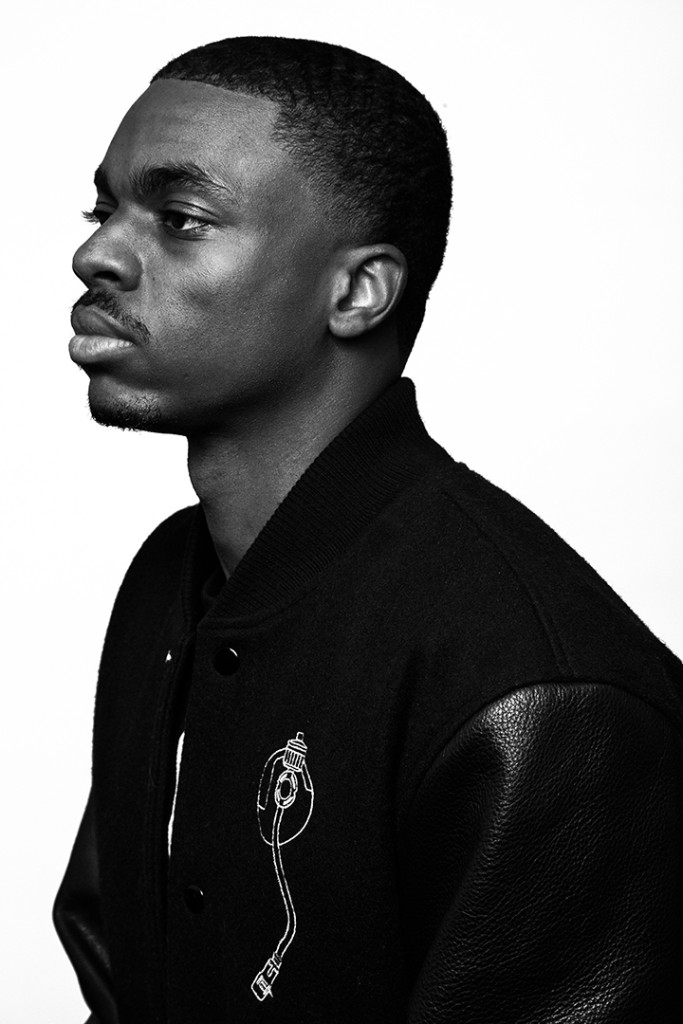
“If you’re starting a project and you know what you’re going to do already and it’s easy to find, then it’s probably not coming from a very unique place. We try to make our music come from a more personal place,” says Staples. “It’s supposed to be here forever. If you get the music in the first two weeks, then we’ve failed.”
This attention to detail makes Summertime ‘06 a particularly dense listening experience. Guest vocalists like Jhené Aiko, Future and Earl Sweatshirt are deeply woven into tracks in a way that subtly emboldens the songs without diminishing their contributions. Distant howls, birdcalls and sirens are stitched into the album’s fabric. Staples has a wisdom beyond his years, eschewing today’s trends in an attempt to create something timeless. But does the modern music listener’s focus on singles, instant gratification and online streaming concern him?
“Not at all because that’s never been what I’m about. It’s not really a hard thing because I don’t care about singles. That’s never been me as a person,” says Staples. “I know my approach to it might never make me the most popular and it might never make me the richest, but that’s not really what I care about. I care about being able to affect lives with a unique perspective and kinda change the way people look at where I come from. The fact that people are surprised that I talk the way that I do or that I’m able to say what I’m able to say is sad to me because it says, ‘So, what am I supposed to be?’”
Throughout Summertime ‘06, Vince Staples explores the duality of the black male in America. On “Lift Me Up”, he says, “I need to fight the power but I need that new Ferrari.” He follows up “Dopeman”, a song that initially appears to be a straightforward drug dealing anthem, with “Jump off the Roof”, a song detailing his own addictions and vices. Throughout the album, Staples depicts a complex, often contradictory moral figure to his audience.
“The problem with things like that is we’ve removed humanity from certain situations. For instance, everyone loves a Lil Boosie character or a Gucci Mane character or a T.I. character. They’re telling you their problems but as soon as they go to jail, they’re stupid, they’re dumb. He was telling you this entire time what his life consists of. Instead of reaching out a hand, you looked through that piece of fuckin’ glass and you gawked at him. So what happens when the lion escapes the zoo? Nine times out of ten, they hurt somebody.”
Summertime ‘06 has subtle echoes of the Michael Brown shooting and the fear of death at the hands of law enforcement that follows young African-American men. Unlike someone like Kendrick Lamar, Staples rarely tackles the issue directly in his lyrics. Young black artists like Staples are placed in the unenviable position of being expected to speak for an entire generation of people, whether they want to or not.
“The problem in this country is that we don’t value humanity. Doesn’t matter what colour the person is, we don’t care about each other because a man kills nine people and the first thing we think is, ‘He needs to die.’
“We have to be looked at as if we’re humans. If you think it’s going to stop by showing people, ‘Hey, you killed another black person,’ it’s never going to end. But if you can lead [people] to believe that they just killed [themselves], that’s when change can come.”