GENER8ION ‘Love & Tears’
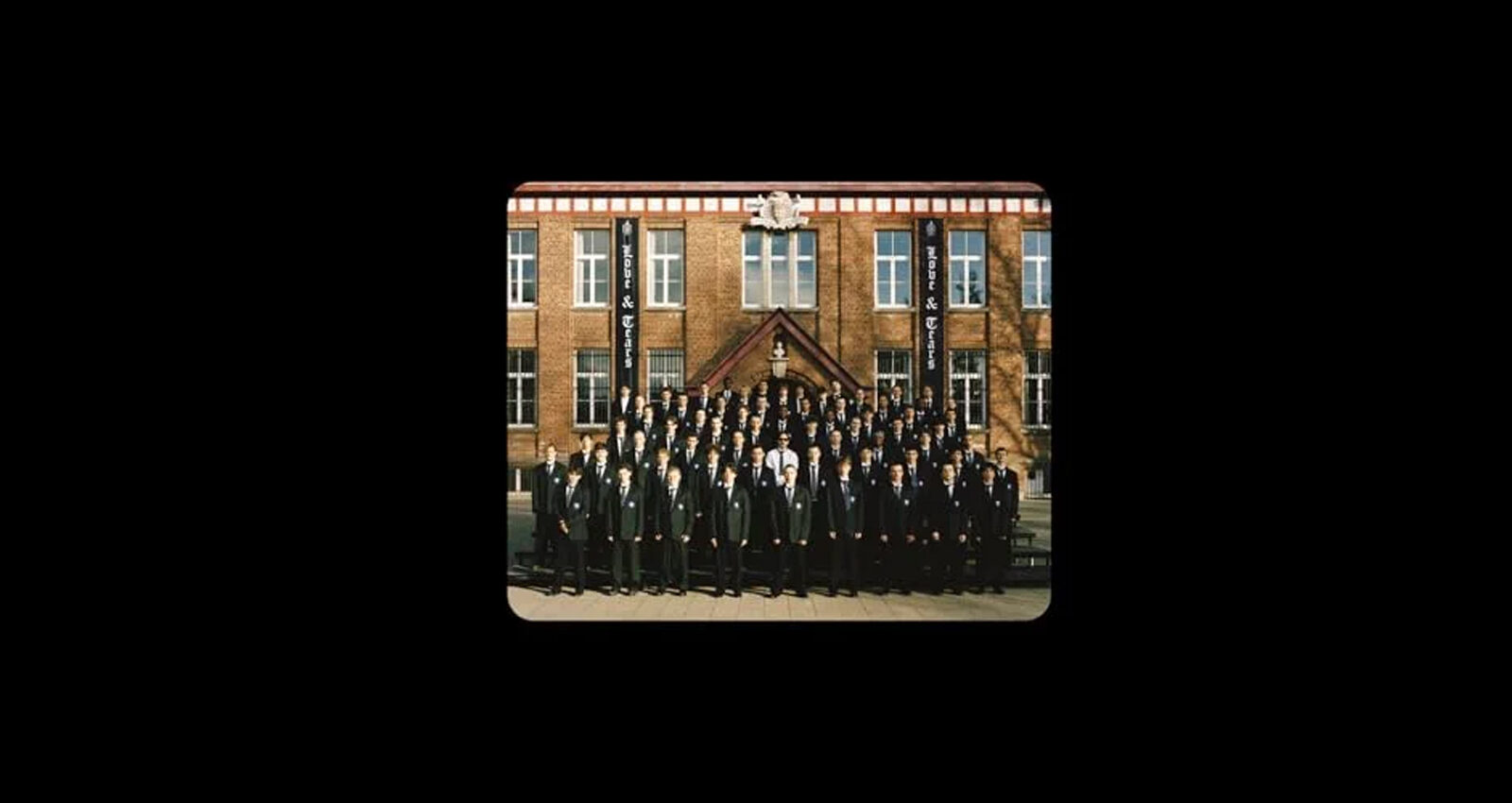
For most artists, an album creates a world. For GENER8ION, the world came first.
Released alongside Vision of 2034, an immersive exhibition from Surkin and Romain Gavras, Love & Tears arrive not as a standalone record but as one component of a sprawling multimedia universe. The album’s songs, films, choreography and narratives all exist within the same imagined future, a place where conspiracy theories have become religions, masculinity has become performance, and technology has only amplified humanity’s oldest insecurities.
What makes the project compelling is that its vision of 2034 rarely feels futuristic. The boys tearing through the classrooms in “Storm” are recognizable today. Likewise, the title track’s haunting video places Charlize Theron beneath the glow of a futuristic machine, yet the focus remains entirely on her emotional response. As her expression shifts from joy to sadness, GENER8ION reminds us that technological progression does little to resolve the anxieties, desires and vulnerabilities that define human experience. The future isn’t populated by robots or innovation. It’s populated by people.
That perspective transforms Love & Tears from science fiction into social commentary.
Musically, the album often prioritizes atmospheric for immediacy. Collaborators including Yung Lean, 070 Shake, Yannis Philippakis and Adèle Castillon feel less like featured guests than inhabitants of the same world. Nowhere is that more apparent that on “Storm I” and “Storm II,” a two-part collaboration with Yung Lean that serves as one of the album’s defining statements. Accompanied by a striking short film directed by Gavras and featuring choreography from Damien Jalet, the tracks transform a portrait of adolescent aggression into something far more vulnerable, exploring masculinity, belonging and the search for connection beneath performative bravado. Lean’s detached delivery and long-standing fascination with alienation make him a natural fit with GENER8ION’s universe, turning what could have been a guest appearance into one of the project’s most essential characters.
The title track provides the album’s emotional anchor. While much of Love & Tears explores collective behaviour and cultural anxiety, “Love & Tears” narrows its focus to something deeply personal. Philippakis’ performance feels suspended between hope and despair, capturing the uncertainty that runs through the entire record. It’s a reminder that beneath the grand concepts and striking visuals, GENER8ION remains concerned with human emotion.
The album’s greatest achievement may be its refusal to separate music from context. In an era where songs are increasingly consumed as isolated pieces of content, Love & Tears asks listeners to engage with a complete artistic vision. Some may find that ambition overwhelming. Others may wish the individual tracks stood outside of the mythology surrounding them. Yet few contemporary releases attempt world-building on this scale.
Love & Tears succeeds not because it imagines the future, but because it recognizes how strange the present has become. By placing today’s fears, obsessions and desires ten years ahead, GENER8ION creates a world that feels both distant and familiar.
Love & Tears is out now on Iconoclast Music.