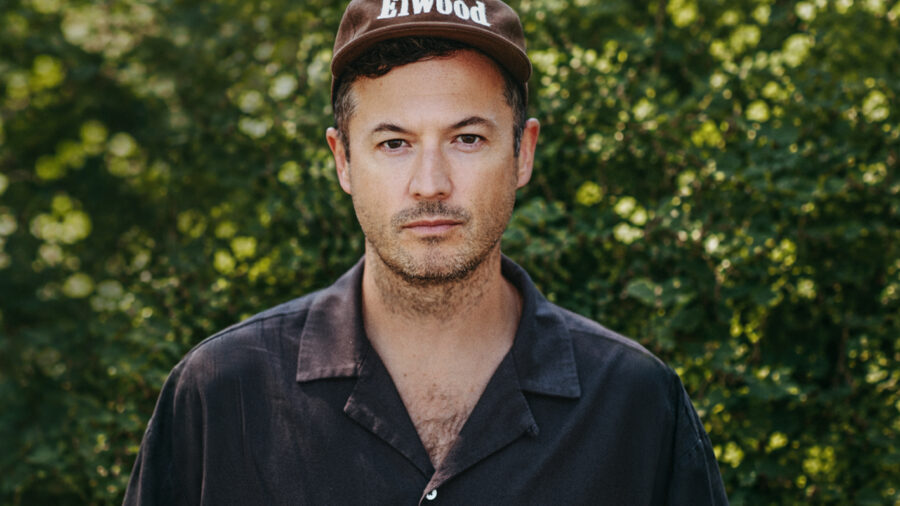
Yung Lean

Few artists had risen as quickly as Yung Lean. His influence could be heard everywhere, from bedroom producers to a new generation of artists blurring the lines between rap, pop, and internet culture.
His latest album, Warlord, finds Lean at a turning point. The audience is larger, the expectations greater, and the experiences informing his music far more personal than before. The dreamy detachment that defined much of his early work remains, but it’s increasingly grounded by reality.
“Life sort of hit me.”
An understated way of describing a period that would leave a lasting mark on both the artist and his music. While Yung Lean’s early releases often drifted through internet references and dreamlike imagery, Warlord is rooted in something different. The record is darker, more direct, and shaped by experiences that extend beyond the world he helped create.
Before the tours, sold-out shows, and growing influence, there was Stockholm.
“I grew up in Belarus, in Russia, but spent most of my time in Stockholm,” Lean says. “Stockholm is kind of crazy. I went to normal public schools – a lot of bad kids and a lot of hooligans.”
For an artist who has become the subject of endless discussion, interpretation, and analysis, Lean’s own version of events tends to be remarkably straightforward.
The same understated perspective carries over into his reflections on the new record.
“My manager died. I went to the hospital for a drug overdose. A lot of stuff happened.”
The statement is brief, almost matter-of-fact, but its weight hangs over much of the record. Songs like “Eye Contact” and “Highway Patrol” trade some of the escapism of Lean’s earlier work for something more personal and immediate. Even at its most atmospheric, Warlord feels anchored by real-world experiences.
If the album documents a period of upheaval, it also reinforces the stability that has existed at the centre of Yung Lean’s career from the beginning.
What started as a group of friends making music in Stockholm has survived international tours, growing audiences, and the expectations that followed.
“Ever since I was 16, I worked with Sherman, White Armor and Gud. I’m still working with the same people.”
In an industry built around constant reinvention, Lean’s answer feels almost radical in its simplicity. Success may have expanded the audience, but it hasn’t altered the foundation.
“You can hear with some people – they’re real when they start out but when they’re famous, they just get fake. It’s not like that if you keep the same people around you.”
The sentiment feels revealing. While his influence has spread far beyond Stockholm, he speaks about success with a surprising lack of ceremony.
“I don’t love the fame. I love making music and hanging out with my friends, like on the tour bus.”
“My life’s the same – I just have more money for clothes.”
By the time the broader music world caught up, Yung Lean had already built a devoted global audience. Yet the person behind it all remains far less interested in the attention than the work itself.
“While recording Warlord a lot of things went down, so I grew as a person.”
Warlord is the sound of that growth taking shape.