Machine Gun Kelly
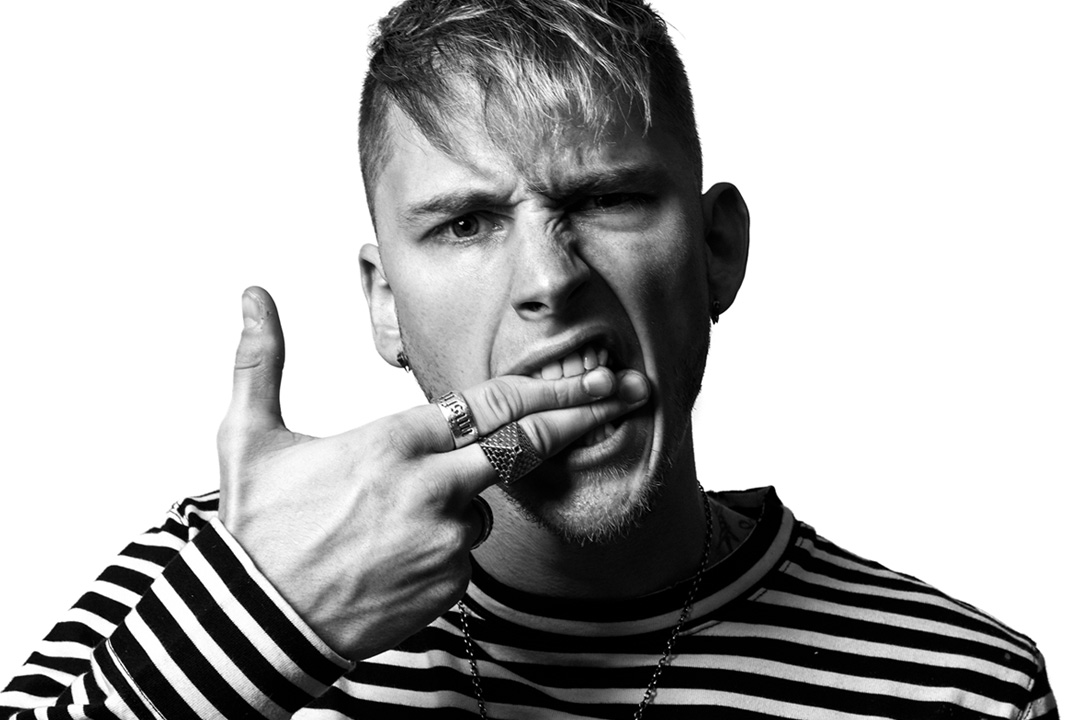

Machine Gun Kelly has never fit comfortably into a single lane. Raised on punk rock but drawn to hip-hop, the Cleveland native builds his reputation on relentless energy, uncompromising honesty and a deep connection with fans who saw themselves reflected in his music. With the release of General Admission, MGK delivers his most personal work to date, documenting his personal struggles while inspiring listeners to forge their own path. We caught up with MGK to discuss General Admission, punk rock influences, acting and the responsibility that comes with having a platform.
G—General Admission’s lead single, “Till I Die”, has a harder sound, whereas “A Little More” seems more conscientious. Where does the album fall in the scale of these two songs?
MGK—I think that this album is a perfect blend of both. On one end you have the person who grew up on the east side of Cleveland, involved in a lot of things that I wasn’t comfortable talking about in the first album. On the other, it’s motivational, taking lessons I’ve learned and looking at them in a positive way.
Musically, this album is exactly what I wanted. I can pick up my guitar and play every one of these songs. The way we composed it is like a play of someone’s life. That’s why the General Admission title is appropriate – because it’s like a ticket into my life.
G—It’s been more than three years since you released Lace Up, and you had taken a step back from the limelight. Did the break from fame aid in the development of your sound?
MGK—I think [growing up] was what fine-tuned my artistry. My voice was a lot different back then. I was still young – 20, 21, just trying to find myself – but I’m 25 now. I’ve become more of the artist that I’m going to be for the rest of my life. I found my voice.
G—What responsibility do you feel comes with having a platform as an artist?
MGK—I take a unique responsibility. I took a step further than singing for the youth and I directed some of my messages towards addicts (heroin addicts and opioid addicts in particular). Since I made that connection with that crowd, I’ve seen the impact it has had – more than I could have imagined. With depression or addiction, if you can be there for them in your music, it can be a ray of light in the dark.
G—You’ve also landed a role in the upcoming Showtime series Roadies. What has that experience been like?
MGK— It’s been fulfilling getting to play somebody that I’m not; it’s a high that I haven’t felt before. Roadies started as a TV pilot I did with Cameron Crowe. We spent a month in Vancouver shooting it. There are so many great actors involved, and I’ve learned a lot from being around them.
G—Your live shows are known for blending punk rock energy with hip-hop. Where do you draw inspiration for your on-stage presence?
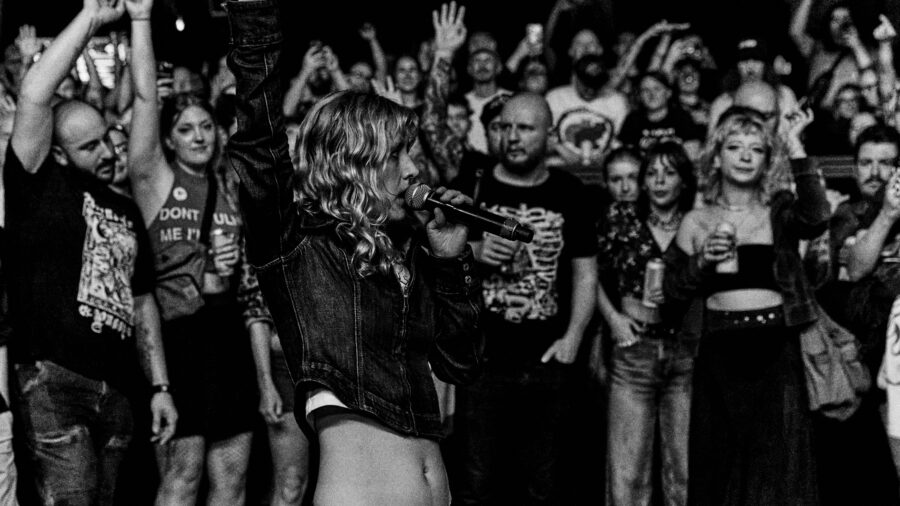
MGK—I grew up a punker. All punk rock is attitude. It wasn’t about how well you could play but about your presence and how you played. So given that [punk] was what I grew up on, all I knew was to bring my energy out, lose consciousness and let the feeling take over. In my later years I sharpened my skills as a musician and blended the two. On tour, I maintain that high, punk rock confidence and attitude, but I’m also putting in a lot more soul [because] I became a much better musician. Mostly playing the guitar on stage – it’s a dope musical experience.
G—Have you been playing guitar for a while?
MGK—I used to be in a punk band a while back. Then I kind of stopped that when I realized I couldn’t sing. That’s when I discovered what rap music was.
G—What impression do you want to leave as an artist?
MGK—I want people to think of me as the person who took his own path. I didn’t have any footsteps to follow.