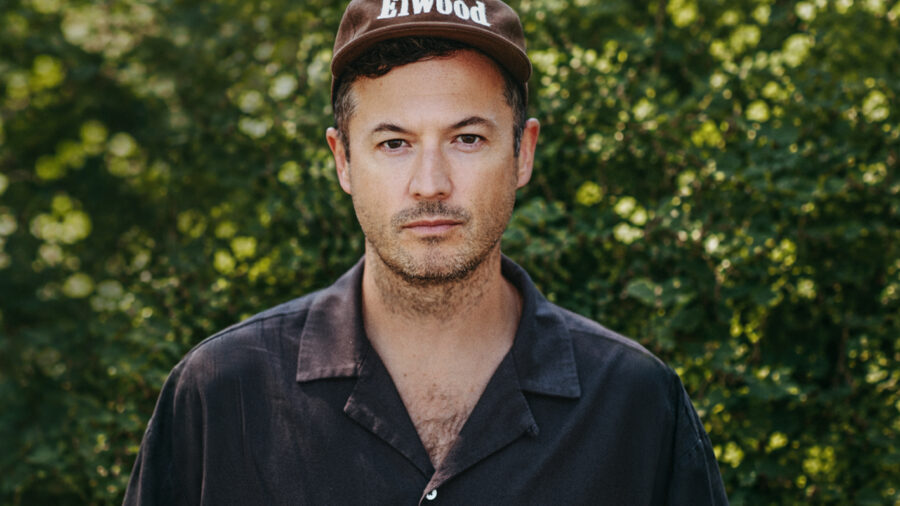
Lee Fields

Soul music has undergone a revival in recent years. Undoubtedly some of the appeal of soul music for today’s generation is the stripped down raw feel. Soul music feels sincere in a way that an Auto-Tune song doesn’t. The revival also comes from our nostalgia for the past. A visit to the t-shirt section at Urban Outfitters demonstrates the absurd level to which nostalgia for the past can rise. But there is a difference between a vintage T-shirt and one made to look vintage. Lee Fields sounds old school soul because he is old school soul. He recorded his first single, “Bewildered”, in 1968 – forty-five years ago and he just keeps singing. With his latest album, Faithful Man, released last year, Fields is still making classic soul music.
Lee Fields was born in North Carolina into a musical family. “My father had a band when he was young and my mother was a gospel singer [who] sang in the church until she died,” says Fields. Growing up in a musical family, Fields always liked music, but his musical career actually only began because of a dare. A friend dared him to sing at a talent show. Although Fields liked Sam Cooke and Otis Reding, he also learned James Brown songs because Brown was so popular at the time. “Like everybody I just thought he was a great artist,” says Fields. At the talent show Fields covered a James Brown song and the girls went crazy. With the feeling of being on stage and the response from the audience, Fields thought, ‘Hey this is what I should be doing,’ and began to consider a career as a performer.
I’ve tried to stay vigilant of the changing music industry and conforming without changing myself.
The similarities between Fields and James Brown were so strong that he quickly earned the nickname ‘Little J.B.’ However, the nickname ‘Little J.B.’ fits Fields for another reason beyond sharing that charismatic and frenetic stage performance and a talented voice. James Brown was known as the hardest working man in show business and that title could now be easily applied to Lee Fields. Anyone who has maintained a musical career for forty-five years is not only talented and adaptable to changing times, but also works hard. Over the last few decades, Fields has produced fifteen albums ranging from funk to soul music. All the while he has kept touring. Fields believes he’s had such staying power because of his flexibility. “I’ve tried to stay vigilant of the changing music industry and conforming without changing myself,” says Fields. He’s performed with many well-known soul singers, but counts his work with “O.V. Wright, Martin Solveig, Wilson Pickett, and John Oates,” as his favorites.
It takes a painter repeating a stroke thousands of times before he/she can master the medium. Similarly, Fields began to hit his stride as a musician twenty years after he began recording. “I would say in the nineties. That’s when things really started to happen for me,” says Fields. In 1999, Fields recorded the classic funk album Let’s Get a Groove On. Thirty years after his first single was released, he recorded and mastered the music of his youth.
Fields’ two most recent albums, My World and Faithful Man, have been backed by the band, the Expressions. The collaboration has worked well. Faithful Man encompasses the totality of love – from falling for that perfect girl (“You’re the Kind of Girl”), being tempted by another (“Faithful Man”), falling for the wrong girl (“Who Do You Love”), and the end of a relationship (“It’s All Over but the Crying”).

The lyrics do not seek to be clever or groundbreaking, but are straightforward and true. Country music and soul music share one thing – they both sing about life, pure and simple. What makes soul music popular is the performance. “I think it touches people because the music itself is from the soul. [A true soul singer] is a singer that allows his or her soul to dictate how much passion is put in each line sung,” says Fields. Whether Fields is backed up by drum machines or the excellent Expressions, he pours his soul into each performance. Search online for “Wish You Were Here” and you’ll find various performances of the song with Fields creating a different feel for each performance. The universality of soul is not in a song’s lyrics, but in the emotion. This carries through soul music. Lee Fields is more than just a voice. It’s a performance.
It would be unwise to leave without asking Fields for some life advice. This was the guy who got to New York as a teenager with just $2 in his pocket and created a prolific career out of those humble beginnings. Fields says it’s simple. “Love God and love your neighbour as you love yourself.” Nothing clever or groundbreaking, just straightforward and true.