Jungle
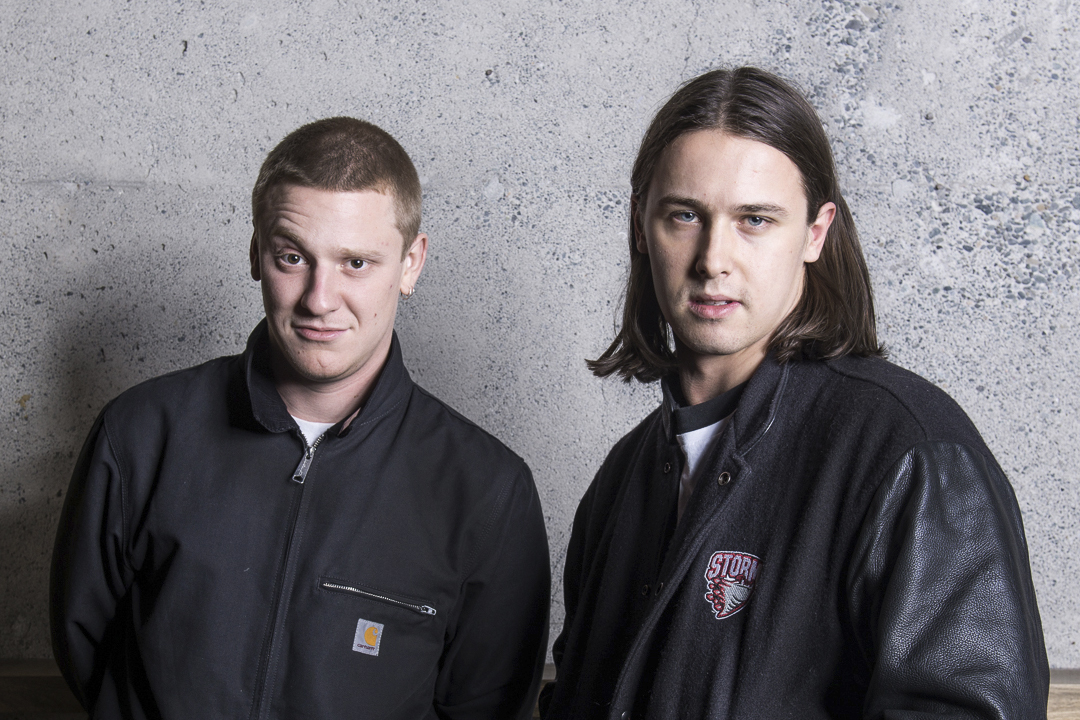
In 2014, Jungle had critics’ tongues wagging with the release of their self-titled debut album. It earned the duo a Mercury Prize nomination and a host of favourable reviews describing them as the one of the most exciting things happening in music – not bad for a band that seemingly came out of nowhere.
In fact, Jungle is the product of childhood friends and London natives, Josh Lloyd-Watson (J) and Tom McFarland (T), who were making music together long before forming the band at the start of 2013. After releasing two self-produced, disco-inspired singles online, “The Heat” and “Platoon”, a coveted spot on BBC’s “Sound of 2014” list was quick to follow.
At the time, Jungle remained shielded in anonymity – not even their names were public knowledge. So when their video for “The Heat” went viral, many wondered if the pair of spellbinding, roller-skating dancers seen on screen were actually the men behind the music. As it turned out, they were two guys known as Icky and Silence from the High Rollaz UK skate crew. And so the mystery deepened.
At first glance, it might seem like the initial facelessness of Jungle was intended to build hype around the band – a way to get people talking. But J explains that it was completely unintentional. “I think it stems from a general misunderstanding of our original artistic concept,” he says. “It was a shyness, to some extent,” adds T. “Everybody’s insecure and self-conscious, and I think in the beginning it kind of stemmed from that. We used to play in a band before and we wanted to remove ourselves from that and leave it to the music.”
It wasn’t long before Jungle’s disco-tinged brand of modern soul caught the attention of XL Recordings. Their debut album was recorded between the band’s own home studio and the XL recording studio – a first for the two, who started off as bedroom producers recording on their laptops.
Anyone can stick a track on SoundCloud and have an audience for it – which is where we started. But the difference for us was when we started playing live and were able to see the impact.
J acknowledges the ease with which people can make music in today’s digital era: “Anyone can stick a track on SoundCloud and have an audience for it – which is where we started. But the difference for us was when we started playing live and were able to see the impact.”
Those early live shows are what changed – and finally exposed – the face of Jungle. After forming a collective of several different artists pulled from a range of disciplines, they eventually expanded to a seven-piece band. The intention was to take their music beyond the bedroom to create a very real, very human connection to the audience with a fuller sounding, more experiential performance. As J recalls: “We played a show in Mexico to around fifteen thousand people and the noise and energy from that crowd was just immense. It’s reassuring to know you are creating something that’s touching people.”
Trying to fit Jungle into any one category is no easy task, with a sound that’s influenced by several decades’ worth of funk, electronic, world music and seemingly everything in between. And that’s just fine with T: “I don’t really believe in trying to define music or classifying genres – I just believe in music. You could look at Kasabian and say they were ripping off The Stone Roses, until people started ripping of Kasabian and then nobody mentions the Stone Roses. Music has a cycle of borrowed influences.”
The initial mystery surrounding Jungle may have diminished, but their popularity continues to soar – as does the potential for criticism. Says T, “The more exposed you become, the more people want to bring you down.” But in typical Jungle fashion, they’re less concerned about what others think and more concerned with continuing to create great music that people want to listen to. T explains, “People are going to write negative things about you but you can learn to be stronger and use that criticism to help your process of writing.”
In the end, Jungle isn’t about the mystery or the hype or the image people choose to buy into. As J puts it, “It’s about removing the possibility of our own ego.”