Warpaint
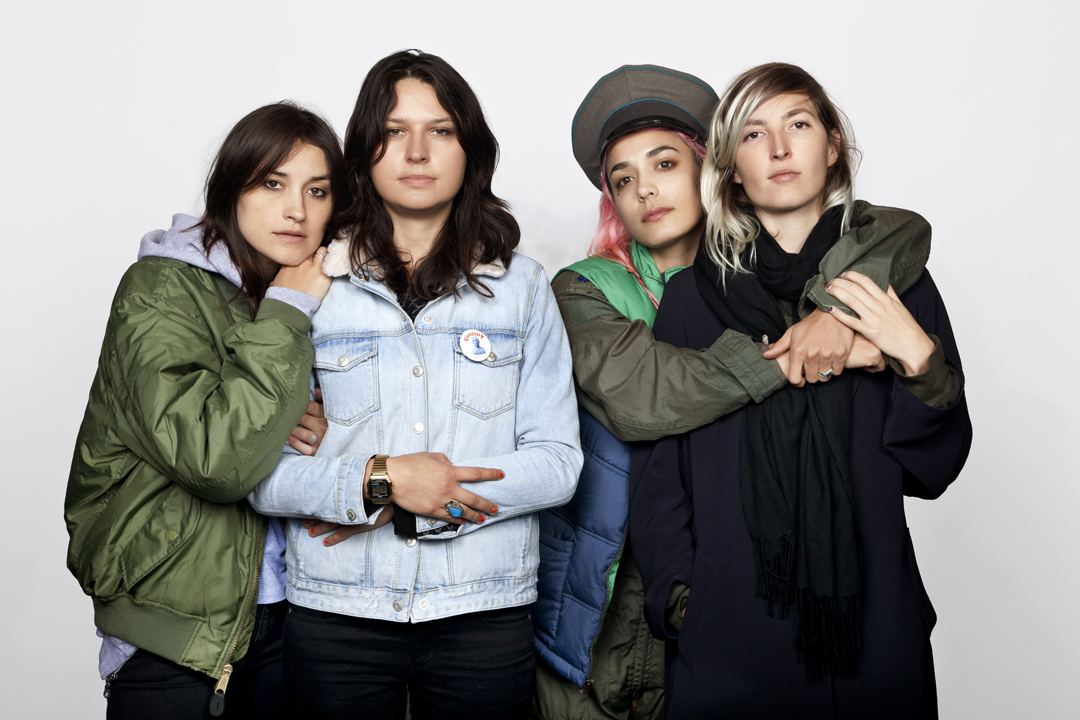
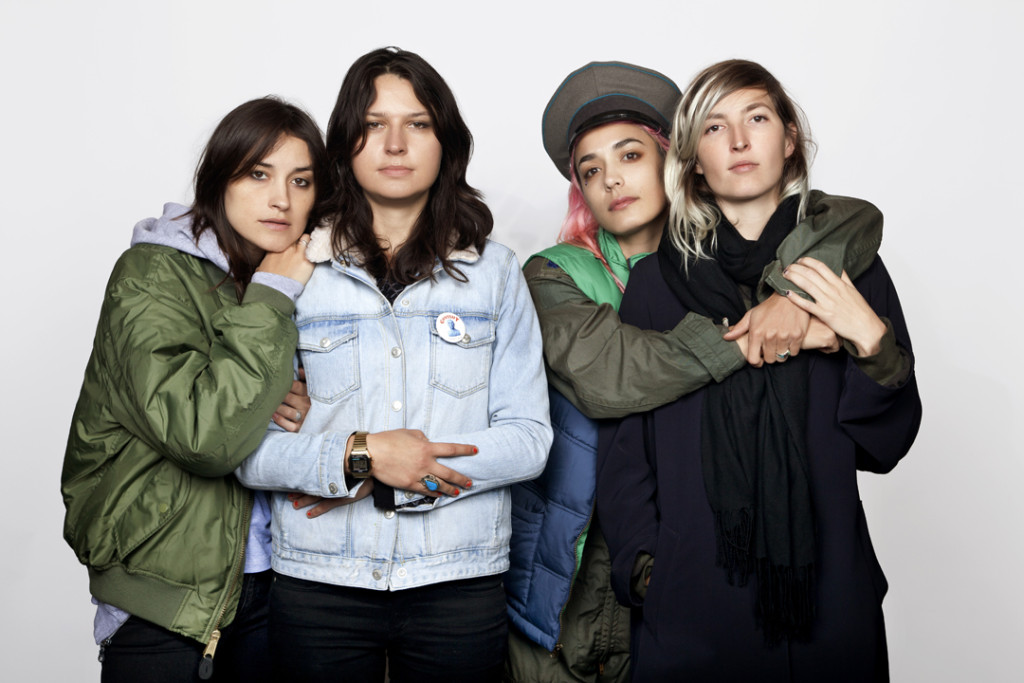

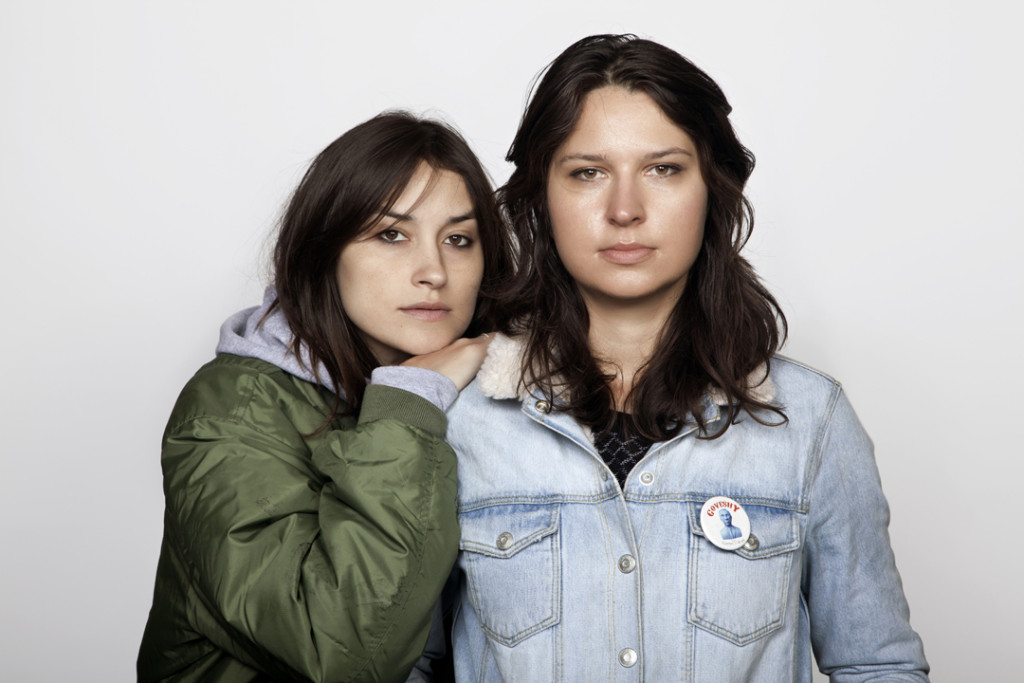

On the cover of their new album, the members of Warpaint are superimposed over each other, coalescing together in a smoky haze designed by bassist Jenny Lee Lindberg’s husband, the director Chris Cunningham. Eponymously titled despite not being their first effort, there is a sense that Warpaint have come into their own since 2010’s The Fool, developing a refined sense of self-discovery after gaining drummer Stella Mozgawa and spending two and a half years touring between albums. I chatted with Warpaint’s Jenny Lee Lindberg and singer/guitarist Emily Kokal outside their tour bus in Montreal a few hours before they took the stage at the Corona Theatre.
“The whole thing about self-titled and even I guess the album cover is that we are more of a complete unit with Stella and this is the first album that we’ve written with her,” explains Kokal.
“From the ground up, from the very beginning so it was really new,” says Jenny Lee Lindberg. “She came in the band, she helped us record the album The Fool and then we went on tour but writing with her was put on hold, in the sense of making a new album, for those two and a half years basically.”
There was something about all of us doing this together. Going away with each other was about rediscovering ourselves as friends, as a band, what’s going on inside of us without all the distractions.
“There was something about all of us doing this together. Going away with each other was about rediscovering ourselves as friends, as a band, what’s going on inside of us without all the distractions.”
After the aforementioned epic tour that took them to Coachella, Bonnaroo, Glastonbury and beyond, the band decamped to Joshua Tree National Park in southeastern California to record the demos that would eventually evolve into Warpaint.
“We rented a dome and we were out there for almost a month and we just setup a little recording studio there and we made demos,” said Lindberg. “It’s what we needed after touring. [Going to Joshua Tree] was like the flipside of that.”
“It’s so stark out there, there’s not a lot of people. It’s so much sky, really trippy looking, like another planet. It’s definitely inside the music. We played every day with the door open into this crazy open desert space so you’re gonna adapt to your surroundings and play into your surroundings. It was a collaboration.”
Produced and mixed by the renowned mainstream pop architect Flood with additional mixing from Nigel Godrich of Radiohead fame, Warpaint finds the band’s individual elements emphasized. In opposition to the peripheral role it took on The Fool, the drumming here is clear and insistent, often recalling the texture and rhythm of sampled hip-hop breakbeats on songs like “Hi”. Electronic sounds figure in more prominently (a frosty synth bass melody anchors the spectral stomp of “Biggy”). The songs are less plaintive and more direct, providing a more dynamic backdrop for the richer, more present sounding vocals of Kokal and Theresa Wayman.
“This album is definitely more stripped and I think it’s easier to point out. This one’s a little more simple and those things are more noticeable. The last record was all in,” Lindberg said.
“That’s the thing about Flood that is different than how we intuitively mix our demos is that we just put everybody up front,” says Kokal. “It’s kinda like ‘we’re a band, here’s everybody and what they’re doing’ and Flood’s like ‘you’re gonna barely hear this guitar back here…’”
There’s an undertone of tension to the songs on Warpaint, a constant push and pull that rests in the framework of every song, from the Broadcast-like space pop of “Teese” to the high octane funk punk of album highlight “Disco//Very”. During the latter song’s bratty mutant disco assault, the drums drop out and the band sings in unison, “I need room for everyone! / I need to take a break!” It feels like a statement on the challenges of life in a band, a traveling living situation that requires patience and cooperation.
I think it’s just what happens when we get together and when we play music. I don’t think that we have any pre-conceived notions of what it is that we’re doing when we go in there.
“I think it’s just what happens when we get together and when we play music,” says Lindberg. “I don’t think that we have any pre-conceived notions of what it is that we’re doing when we go in there…”
Kokal interjects, “It’s the sound of compromise!”
“We’re also really moody,” continues Lindberg. “And I think that we make music and write music depending on what kind of mood that we’re in.”
“There’s also elements where somebody might wanna really push it and like bang, bang, bang it while someone else wants it to barely be heard,” said Kokal. “That’s part of what forms our sound sometimes, the compromise of ideas.”