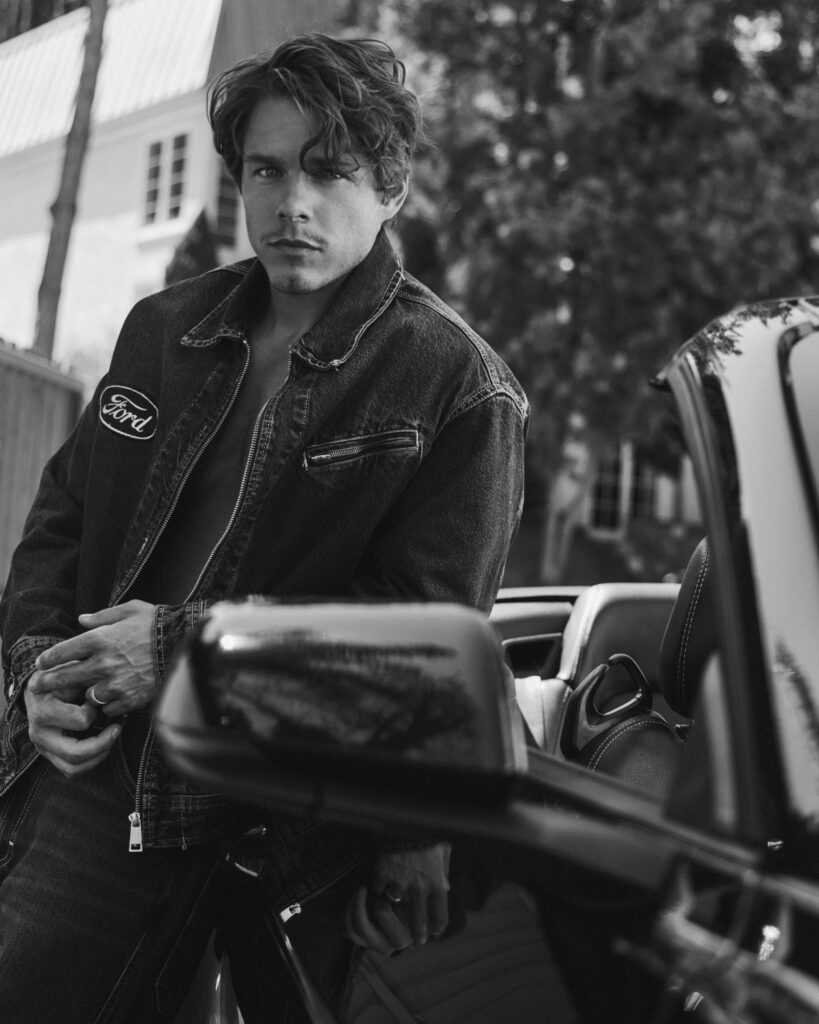
Jake Manley – The Long Game
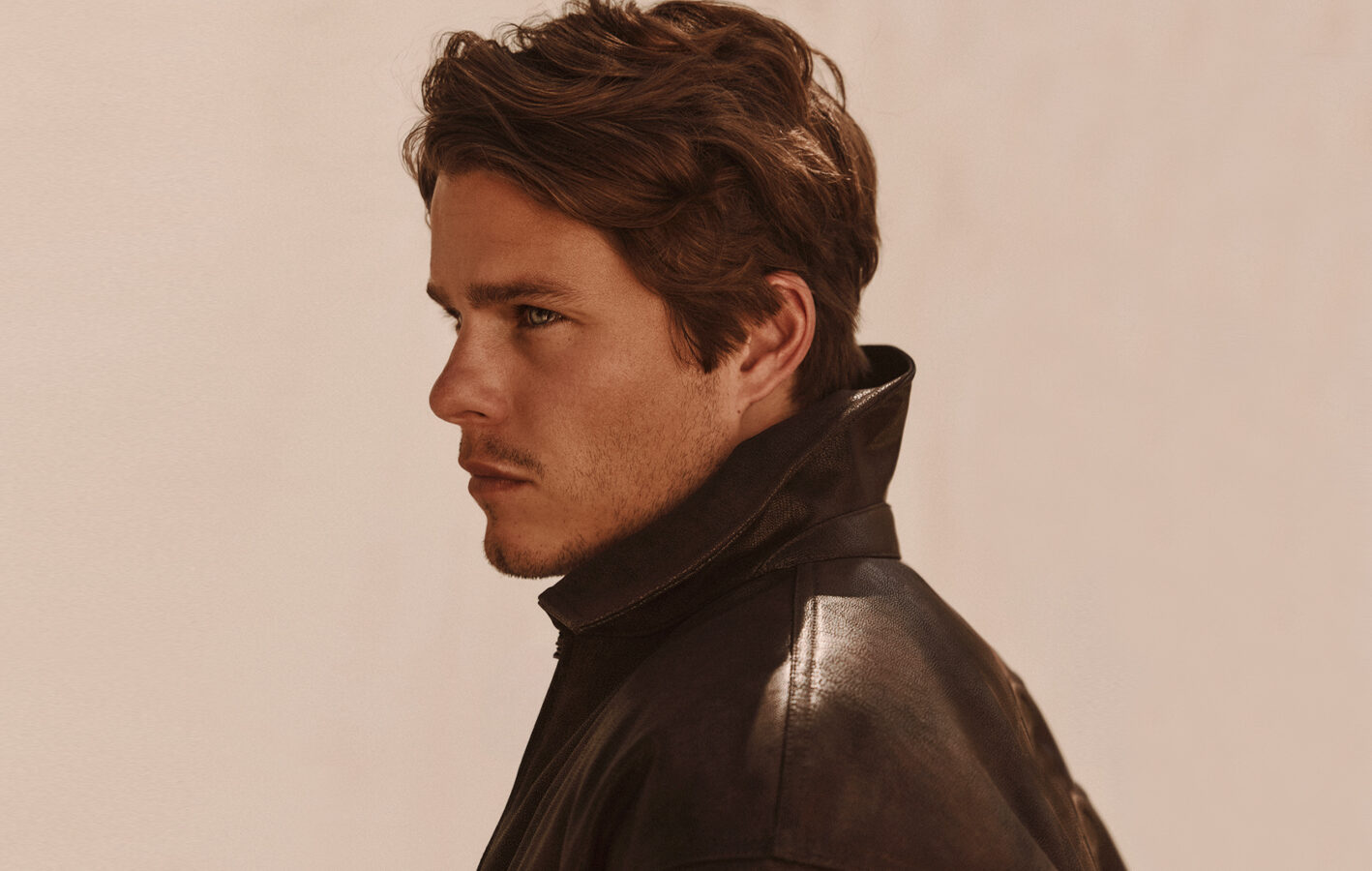
With Wylder Holt stepping into a larger role in the upcoming season of My Life with the Walter Boys, Jake Manley reflects on the early days of DIY skate movies made with friends, the hard-won breaks that followed, and a career built to last.
When audiences return to the highly anticipated third season of Netflix’s “My Life with the Walter Boys,” they will find Wylder Holt occupying more of the frame. Introduced in season two as a rising bronc-riding star whose confidence offered Alex Walter both a model and a challenge, Wylder returns with greater dimension, higher stakes and far more room for Manley to play. For the Canadian actor, however, this is not the beginning of the story. It is the latest turn in a career built patiently through curiosity, persistence and a genuine love of storytelling.
Long before the auditions, film sets, and Netflix series, there was a young boy sitting in a theatre, watching “Titanic” in awe.
What stayed with Manley was not only what unfolded on screen, but the collective reaction inside the theatre.
“I remember being seven, sitting in that theatre and looking around and seeing the impact it had on everyone,” Manley recalls. “I’d never seen a film like that in a group setting before. Everyone in the theatre was crying at the end.” Looking back, he laughs at how little he could have understood. “What did I know? I was seven. But that movie was so impactful.”
It became an early lesson in the power of storytelling and cinema. Before he understood cameras, scripts or performance, Jake Manley understood how a story could affect the atmosphere of a room and move a crowd of strangers while simultaneously unifying them.
“Something resonated in me,” he says.
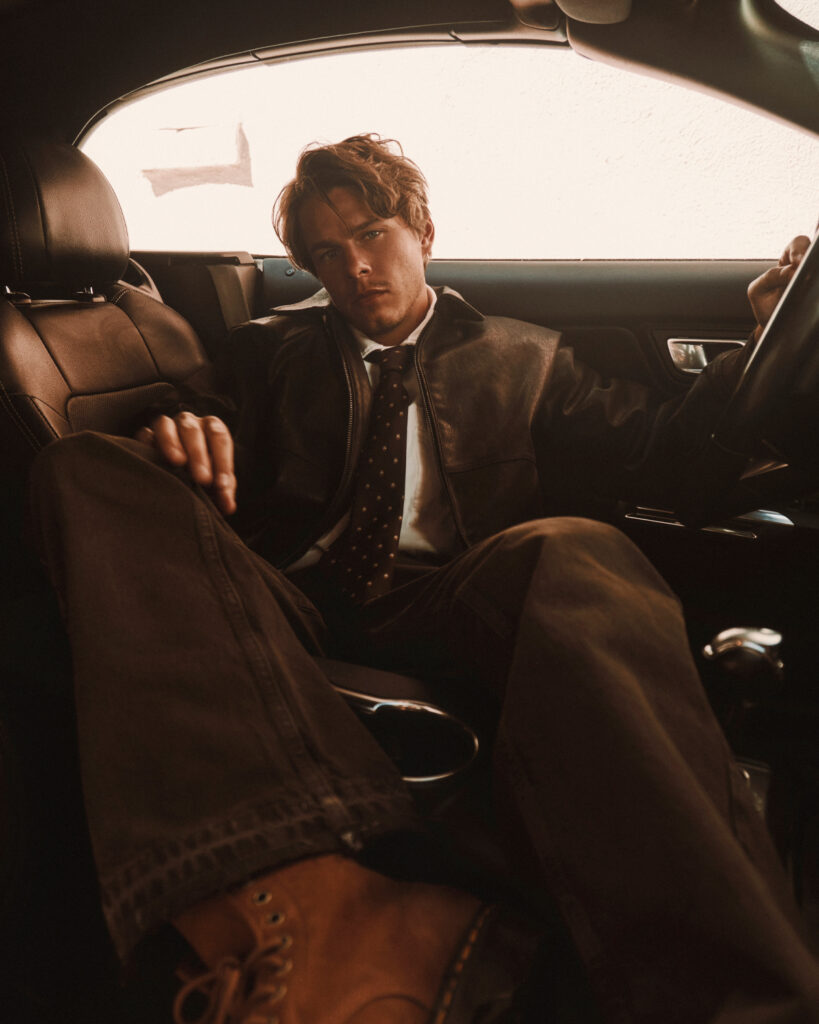
Growing up in Oakville, Ontario, Manley and his friends spent their teenage years making skateboard videos that gradually became something more ambitious. Tricks gave way to plots, friends became fully developed characters and, before long, they were premiering short films for their peers.
“We started making skateboard movies with a narrative storyline,” Manley recalls. “We’d premiere them at our local movie theatre and our whole high school would come out. It’d be this big, fun party.”
Acting was not part of the original plan.
“I always thought I wanted to be a producer,” he says. “I still love the world of producing and being behind the camera.”
Like many young independent filmmakers on a shoestring budget, he stepped in front of the camera out of necessity. That practical decision led to acting classes in Toronto, workshops in Los Angeles and eventually his first professional role at 21.
One of Manley’s earliest guiding influences was his father, a musician who had also studied acting. Creativity was treated less as a fantasy than as something a person could achieve with hard work and perseverance.
“My dad studied acting when he was in his early 20s. He was a musician and was big into the arts. He took me to Los Angeles when I was 16, and I spent the whole summer there and kind of just fell in love with the whole industry and film.”
Confidence, however, took longer to find.
“I grew up pretty shy and timid,” Manley says. “High school teaches you to put on all these filters, and acting really teaches you about taking them off and just being instinctual.”
As he studied acting, Manley began to learn how to dissolve hesitation in order for something truthful to emerge. There was no overnight transformation, only the slow accumulation of experience and the confidence that comes from continuing to show up.
That persistence found its clearest early reward in Netflix’s “The Order.” Cast as Jack Morton, Manley was suddenly leading a series rather than simply appearing in one.
“It was a big stepping stone in a lot of ways,” he says. “The amount that I was working, the responsibility to actually lead a show, and the work schedule was crazy. But being the lead of a Netflix show gave me some credit and some ammo to leverage, get other projects and get meetings with filmmakers.”
The Order sharpened his sense of the roles he wanted to pursue by balancing supernatural mythology with self-aware humour, allowing darkness and levity to occupy the same space. That friction appealed to him.
“I always wanted to do grittier projects,” he explains. “I didn’t want to do cookie-cutter, wholesome stuff. That wasn’t where my passion was.”
That instinct eventually led him to “Find Your Friends”, Izabel Pakzad’s psychological thriller now streaming on Shudder. The film reunited him with Bella Thorne after “Infamous,” though the dynamic could hardly have been more different: former partners and lovers now stand on opposite sides of an increasingly brutal narrative.
“I love working with Bella,” Manley says. “She’s so real, and she elevates everyone she does scenes with. I think we definitely have a similar interest in films, that gritty, off-the-wall type of character and story.”
By the time Manley joined “My Life with the Walter Boys” for its second season, the series had already cultivated a devoted international audience. Stepping into an established ensemble can be daunting, but he found the transition unexpectedly smooth.
“They were so welcoming,” he says. “It’s such a great cast. There are a lot of young actors, but they’re so professional and down to earth. They have all this success behind them, but they’re modest, they’re good people, and everyone’s there to have fun.”
Wylder was initially a relatively contained part: a rising rodeo talent who crossed paths with Ashby Gentry’s Alex, offering him a glimpse of the confidence, discipline and bravado of an older bronc rider.
“They asked me to come back for this third season, and the character is pumped up a lot more,” he says. “It was fun to be asked back in a capacity more than I could have ever imagined, which is cool because usually it works the other way.”
Season three gives Wylder more room to grow, drawing out the tension between his easy swagger and who he is beneath it. Manley describes him as a source of “tough love” for Alex — an older figure who leads partly by example and enjoys the attention that comes with being the hotshot, but may not be as certain as he appears.
“There’s a lot more meat on it this time,” Manley says. “There are some really good scenes with Ashby Gentry, some really fun moments and some twists and turns.” He pauses, carefully avoiding spoilers, then lets his excitement show. “Season 3 is just… it’s going to be the one for the show. I’m excited. I know a lot of people are excited.”

Filming also returned him to Alberta, a province he speaks about with genuine affection.
“I love working in Calgary,” he says. “It’s beautiful. I’ve got friends there, so I’m happy to go work there.”
What stayed with him beyond the set was the landscape and the people: the mountains, ranches, small towns and cafés that made it easy to feel briefly absorbed into the world the series was creating.
Previous western work had already taken him through a week of cowboy camp in Montana, where he learned to ride alongside working cowboys. He never attempted bronc riding himself, but the experience brought him close enough to understand the skill and danger involved.
“When you’re there in person, the sound of the horse bucking is so powerful,” he says. “You feel it in the earth, and you see how fast it is. These guys are serious. I don’t know how they do it.”
Manley believes that breadth of character helps explain why “My Life with the Walter Boys” connects so readily with audiences around the world. “People can really latch on to any of these characters,” he says. “No matter who you are, in your family or friend group, there are so many different personalities. There’s a lot of transparency for the audience to say, ‘I’ve been in this situation before.’”
While the series continues to introduce Manley to a wider audience, it is far from his only project. In the forthcoming horror feature The Casket Girls, directed by Justin Dyck and led by Gabrielle Union alongside Mike Colter, Thomas Lennon and Raúl Castillo, he plays a rookie police officer trapped inside a haunted New Orleans convent as supernatural forces close in.
“I grew up watching Gabrielle Union in ‘Bad Boys II,’ ‘10 Things I Hate About You’ and ‘Bring It On,’ so it was exciting for me to work with her.”
Off screen, his attention is increasingly turning back to where it began. He has co-written a film with a director he previously worked with and is developing and pitching several other projects. Producing, which once seemed like the original destination before acting redirected him, never disappeared from view.
“I love connecting good, talented people that I’ve worked with before,” he says. “There’s nothing better in life than introducing one good person to another good person.”
His advice to younger actors is rooted in the same practical patience that shaped his own career.
“Don’t wait for things to come to you,” he says. “Try and create as much as you can with people. Even if it’s not successful, you’ll definitely learn something from it. It’s never wasted.”
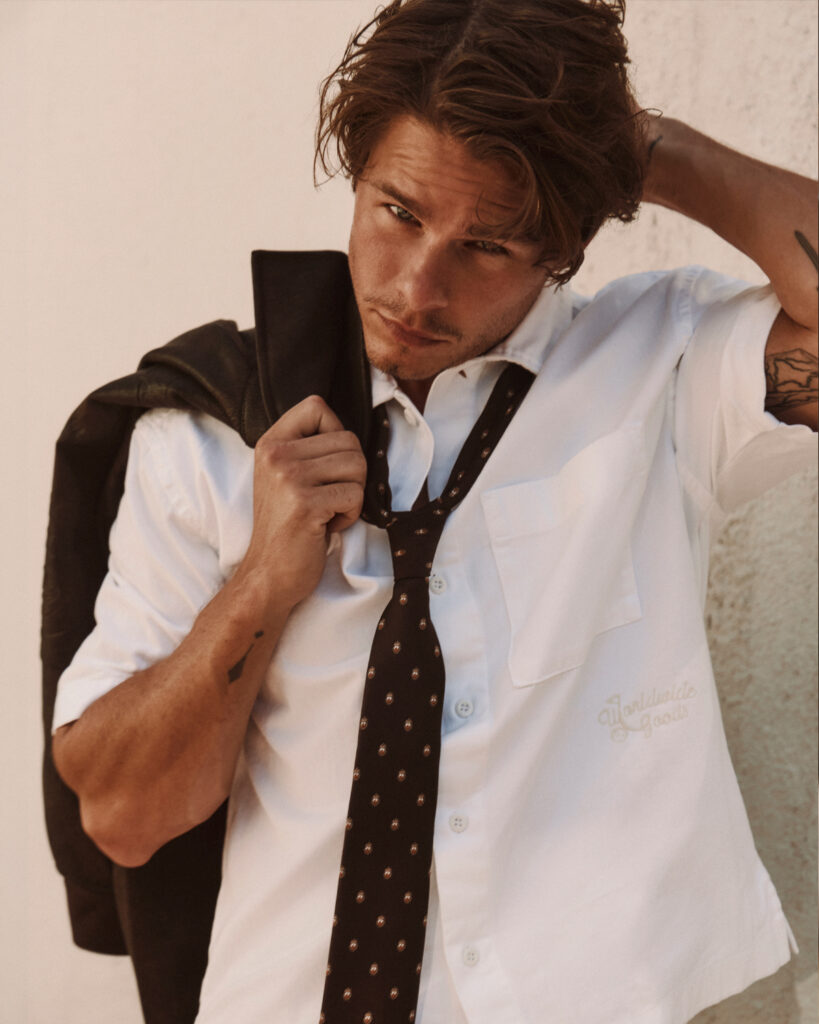
That does not mean the long game is easy. Manley says rejection comes in waves. Sometimes an actor’s skin feels thick enough to absorb it; at other times, one rejection after another can begin to weigh heavily. What helps is staying connected to the process and remembering how often casting decisions turn on factors that have little to do with talent. His own career reflects that persistence: homemade films, years of auditions, opportunities earned one project at a time and a willingness to keep evolving.
When asked what achievement would make his career feel complete, Manley does not envision a finish line.
“My only goal would be to just be consistently working with great people and different people,” he says. “I want to keep doing that. That’s my only goal.”
Nearly three decades after sitting in a theatre, captivated not only by Titanic but by the collective emotion moving through the room, Jake Manley has become part of the stories that create those moments for others. For an actor who first fell in love with movies by watching a room respond, the chance to keep creating that feeling may be the only measure of success that matters.