David Suzuki
There is no denying the urgency in Canadian writer Shane Koyzcan’s poem “Shoulders” when he asks: “How do we save the world? We lay in our beds, curled into question mark, wondering what can we do? Where do we start? Is hope a glue crazy enough to hold us together while we’re falling apart?”
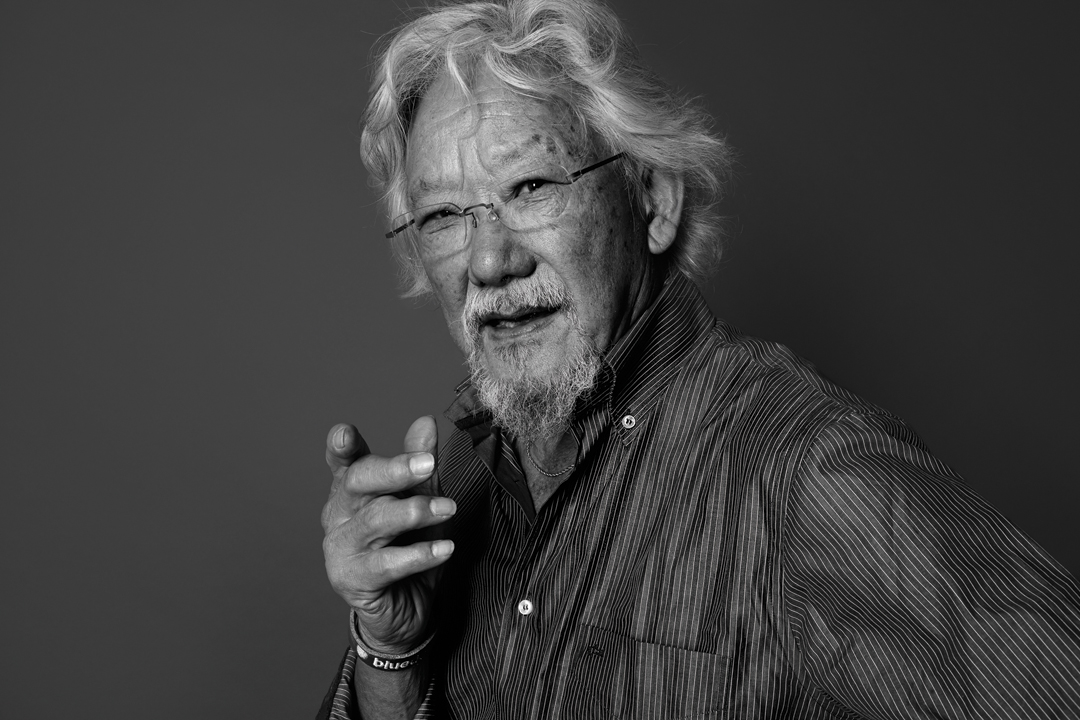
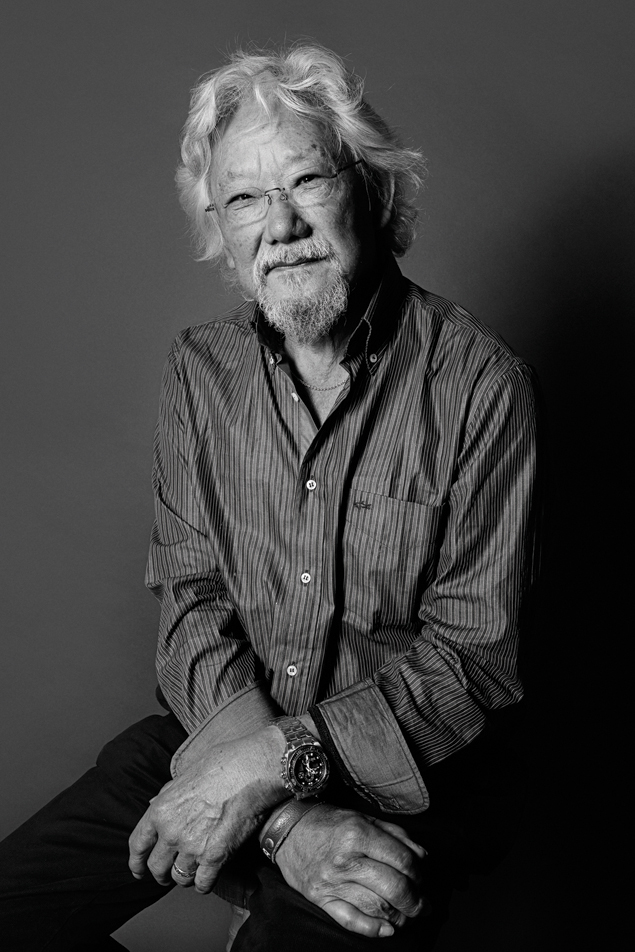
Sitting transfixed in Edmonton’s Winspear Centre is a sold-out Blue Dot Tour audience eager to hear the answers to these questions. David Suzuki, the preeminent scientist, activist, and host of CBC’s The Nature of Things, is calling upon ordinary citizens to support an amendment to the Canadian Charter of Rights and Freedoms to include the right to a healthy environment. What Suzuki is proposing isn’t something new or audacious. More than 110 countries have incorporated environmental rights and responsibilities into their constitutions.
Canada is an “international laggard” on this front, according to environmental lawyer David R. Boyd, a leading voice advocating for the explicit inclusion of environmental rights in Canada’s constitution.
The coast-to-coast Blue Dot Tour is part spectacle and part rally. It gathers a myriad of musicians, local leaders, Aboriginal Elders, and other well-known Canadians such as Koyzcan who lend their voices to spread the message that a change in the constitution will require the voices of individuals, municipalities and provinces.
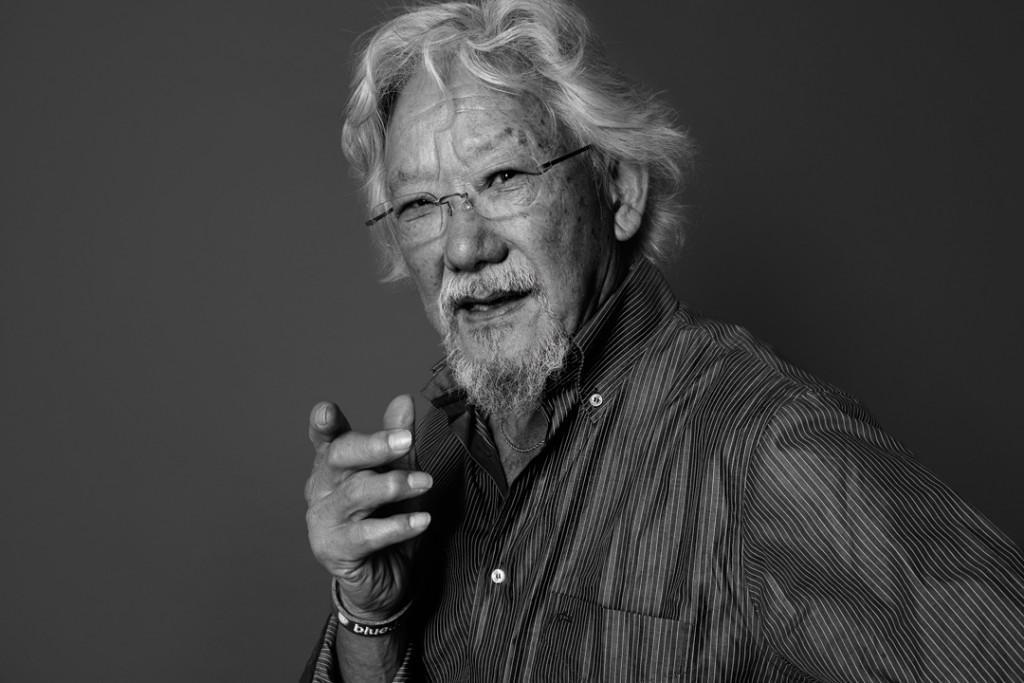
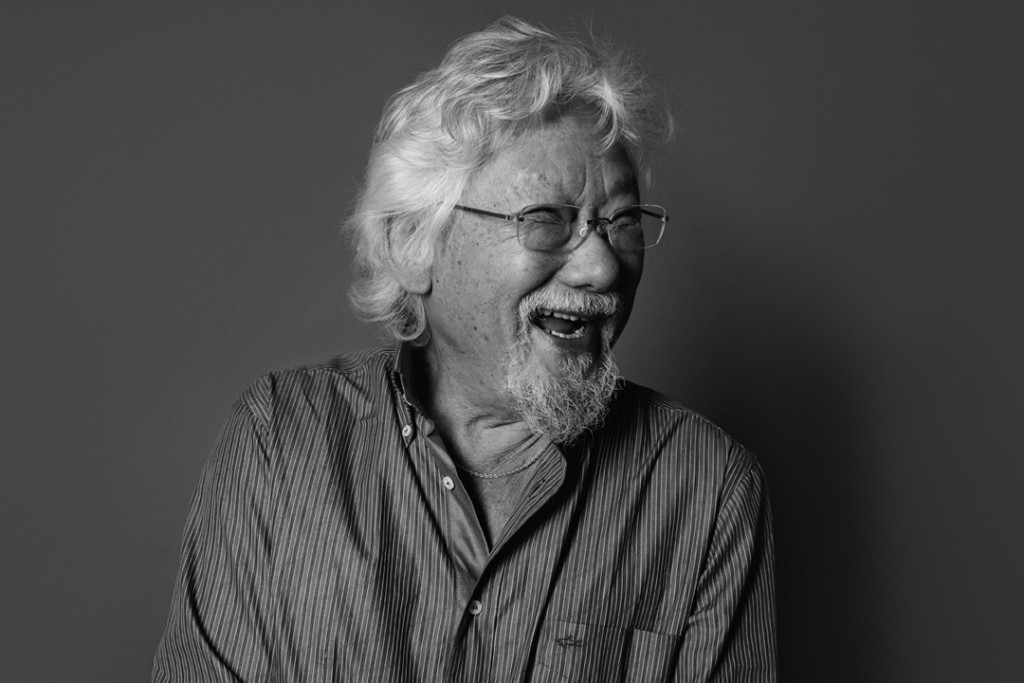
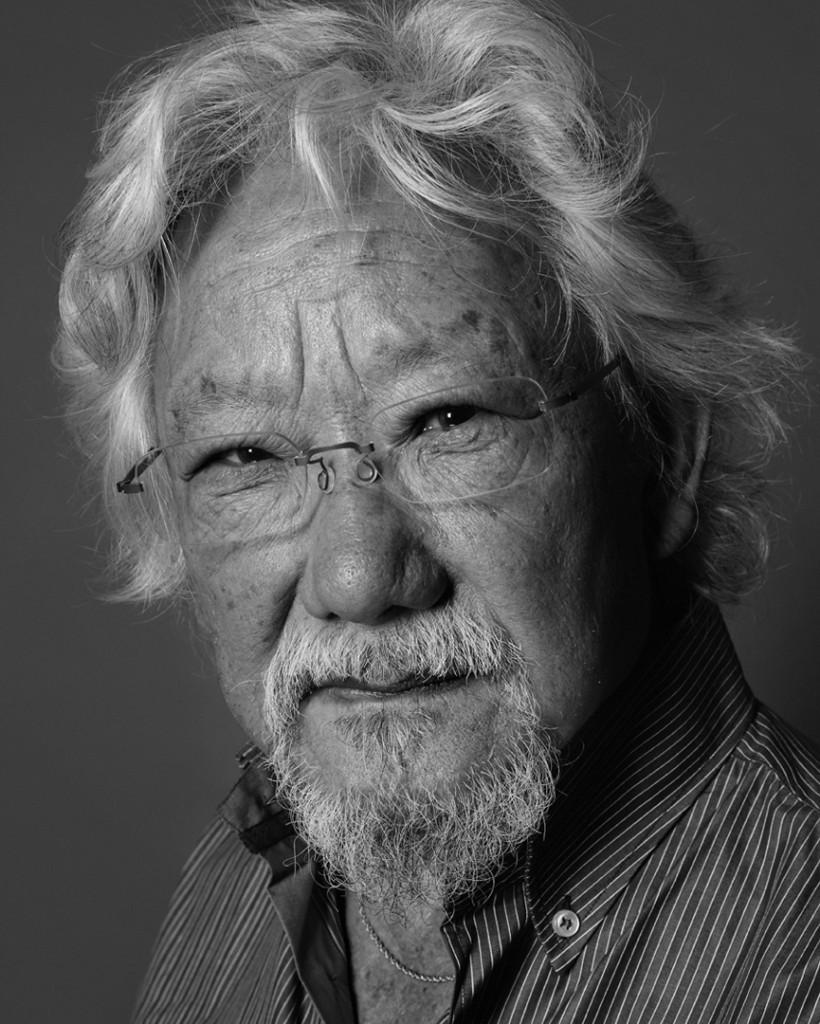
During Suzuki’s stop in Edmonton, I had the chance to sit with him over coffee and pastries and ask why, at 78 years old, he would attempt something so ambitious. “I’ve been involved in environmental issues since 1962, and we celebrated all kinds of victories: stopping dams and drilling for oil in [caribou calving grounds], and taking oil down in super tankers down the coast. We stopped them all and said, ‘Yay! We won!’ Thirty-five years later, the same battles are being fought again, exactly the same battles, and so I said, ‘Look, we’re losing.’ We didn’t shift the way we see ourselves in the world.”
Embarking on this tour, Suzuki says, is “the most important thing I have ever done.” When asked how he hopes to overcome the political and economic resistance the initiative will face, his response was not at all defensive. “This is beyond politics. You know, the environment should be every party’s issue. And so what this does is it gets us away from both politics and economics. We’re now saying: What are the most important things to us as a society, as a species? And forget the economics [and] politics, but what is the most important thing that keeps us alive?”
In the issues I’ve been involved in, musicians are among the first to say, ‘I’m with you’… But it’s more than musicians. We’re not going to win this battle as environmentalists. We need a much bigger tent.
Suzuki reasons that it is in the hands of average citizens of this nation – not just politicians and CEOs – to protect the air, soil and water we depend on. According to Suzuki, one segment of the population that seems to understand this is musicians. “In the issues I’ve been involved in, musicians are among the first to say, ‘I’m with you.’ And I keep asking them, what the hell is it about music? I asked Bruce Cockburn what is it about music? And he hasn’t been able to answer – no musician has told me.”
Yet, artists like Feist, k-os, Patrick Watson, Tanya Tagaq, Neil Young, and many others flock at the opportunity to do what that they can. Suzuki adds: “But it’s more than musicians… We’re not going to win this battle as environmentalists. We need a much bigger tent. So issues of social justice, hunger and poverty, these are our issues.”
The inclusion of First Nations people is something very important to Suzuki. “I’ve been working with First Nations now for 35 years, and they have taught me everything. I mean, I give them total credit for changing the way I look at the environment. And we’ve established very deep relationships with them. In fact, I’ve got two Haida grandchildren.” Suzuki understands how the realities of hunger and poverty are connected to the stewardship of this land. “I think that the [David Suzuki] Foundation is very unique because built into our mandate is [the notion] that we must work with First Nations communities. Not to help them, but as equal partners to support each other. And that’s been very, very powerful.”
At this point in his career, you might expect to see Suzuki settling down rather than taking on the biggest project of his life. But then you realize how personal this mission is for him and you come to understand that he’s looking beyond his own lifetime.
“I have grandchildren, and I know that the world they’re growing up in is nothing like the world I grew up in. Well, that’s pretty shitty stewardship if you ask me. So it’s my obligation to them to do everything I can. I have no illusions. I’m one person. But I want to feel that when I die, my grandchildren will be there and I’ll be able to say to them, ‘I tried the best I could.’ That’s all you can ask.”